Centrifugal Blowers vs. Axial Fans: Selecting the Right Industrial Air Mover
Selecting the correct air moving machinery is the foundation of any efficient commercial or industrial HVAC and ventilation design. Plant directors and MEP consultants frequently face the choice between two primary fan technologies: Centrifugal Blowers and Axial Fans. While both move air, their internal aerodynamic mechanics, static pressure capabilities, and ideal use-cases differ dramatically. Misspecifying these components can result in severe airflow bottlenecks, motor overload, or excessive electricity bills. In this article, we explain the key operational differences to help you select the exact equipment for your facility.
Every industrial exhaust, pneumatic conveying, or building ventilation system relies on mechanical air movers. Choosing between a centrifugal blower and an axial fan comes down to understanding one fundamental principle: Do you need high volumetric airflow at low static pressure, or concentrated directional airflow capable of overcoming high system resistance?
Understanding the Aerodynamic Differences
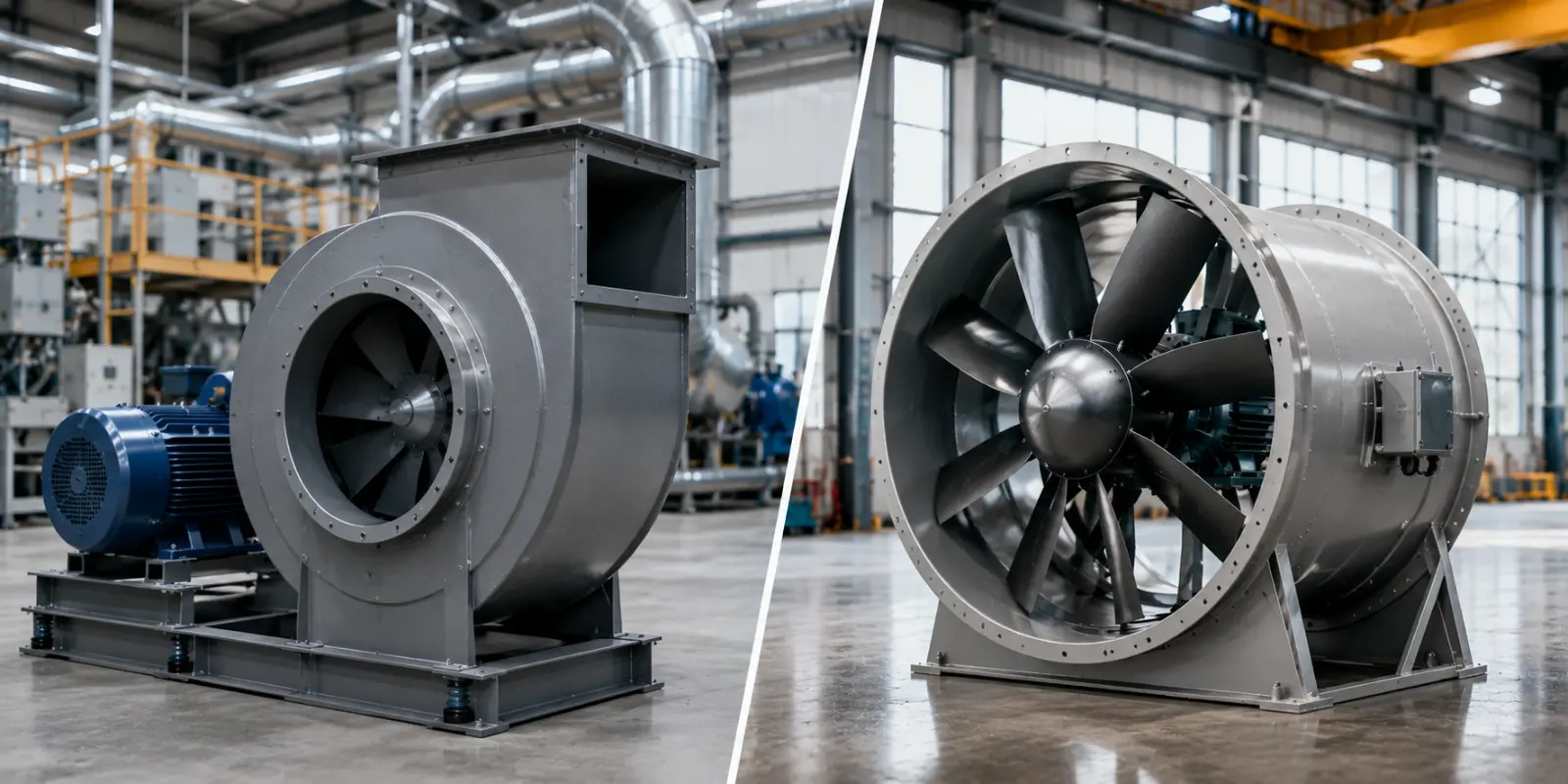
Centrifugal Blowers: Airflow pattern is radial (changes direction by 90°). Static pressure capability is high to very high (up to 1000+ mm WG) with moderate to high air volume (CFM). Best used for dense ductwork, scrubbers, filtration, and boilers where high system resistance curves are present.
Axial Fans: Airflow pattern is linear/axial (parallel to the fan shaft). Static pressure capability is low to medium, but provides extremely high volumetric output (CFM). Best used for open-area warehouse ventilation, heat exhaust, cooling towers, and low-resistance setups.
1. When to Choose an Anzo Air Centrifugal Blower
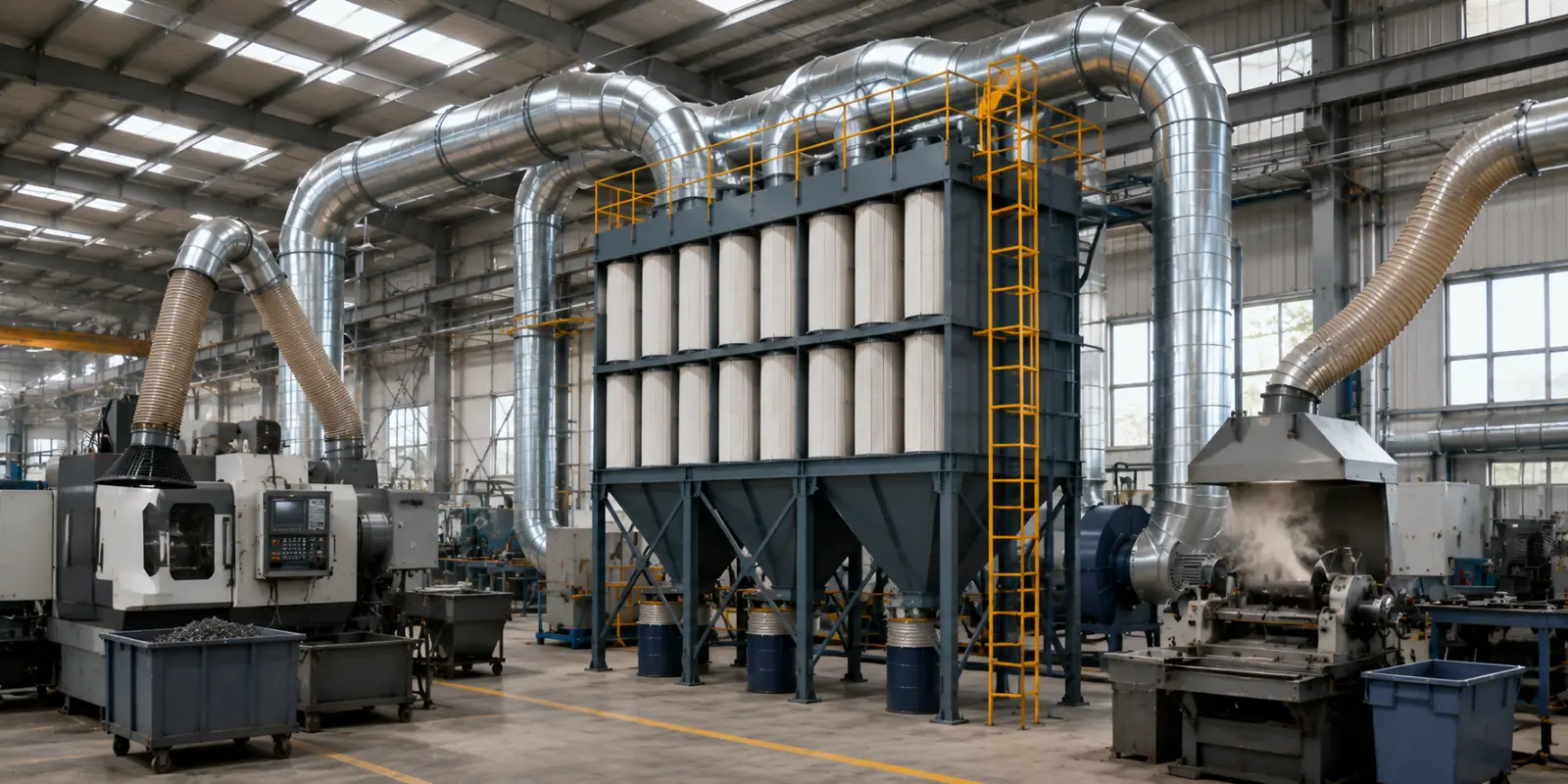
Centrifugal blowers draw air into the housing axially and accelerate it radially through curved fan blades (forward-curved, backward-curved, or radial blades). They act like industrial air pumps capable of generating immense static pressure. You should specify a centrifugal blower when your system involves long, complex ductwork runs with multiple bends and dampers, drawing air through heavy filtration media/wet scrubbers/baghouses, pneumatic conveying of dry powders/grains/wood chips, or high-temperature boiler forced draft or induced draft combustion systems.
2. When to Choose an Anzo Air Axial Fan
Axial flow fans move air parallel to the rotation axis using aerodynamically shaped cast-aluminum blades (similar to an airplane propeller). They excel at pushing massive volumes of air at low static resistance. You should choose an axial fan when your facility requires rapid volumetric air replacement across large open spaces (warehouses, factories, greenhouses), wall-mounted or roof-mounted heat exhaust systems, commercial car park carbon monoxide exhaust networks, or direct spot cooling using portable tube axial man coolers.
Precision Engineering by Anzo Air
At Anzo Air, we manufacture dynamically balanced centrifugal blowers and cast-aluminum axial fans engineered for continuous duty. Our team uses computer-simulated fan curve matching to ensure your air movers operate at peak efficiency with minimal power draw.
Still unsure which fan configuration fits your mechanical specifications? Send your static pressure and CFM requirements to info@anzoair.com to speak directly with an Anzo Air application engineer.